The door that no longer exist

Through the paws of a refugee cat, the raw cruelty of war paints the most painful portrait of exile: a heart that keeps searching for home at a door that violence has already erased from the map

Najwa Sadi Juma
Najwa Sadi Juma
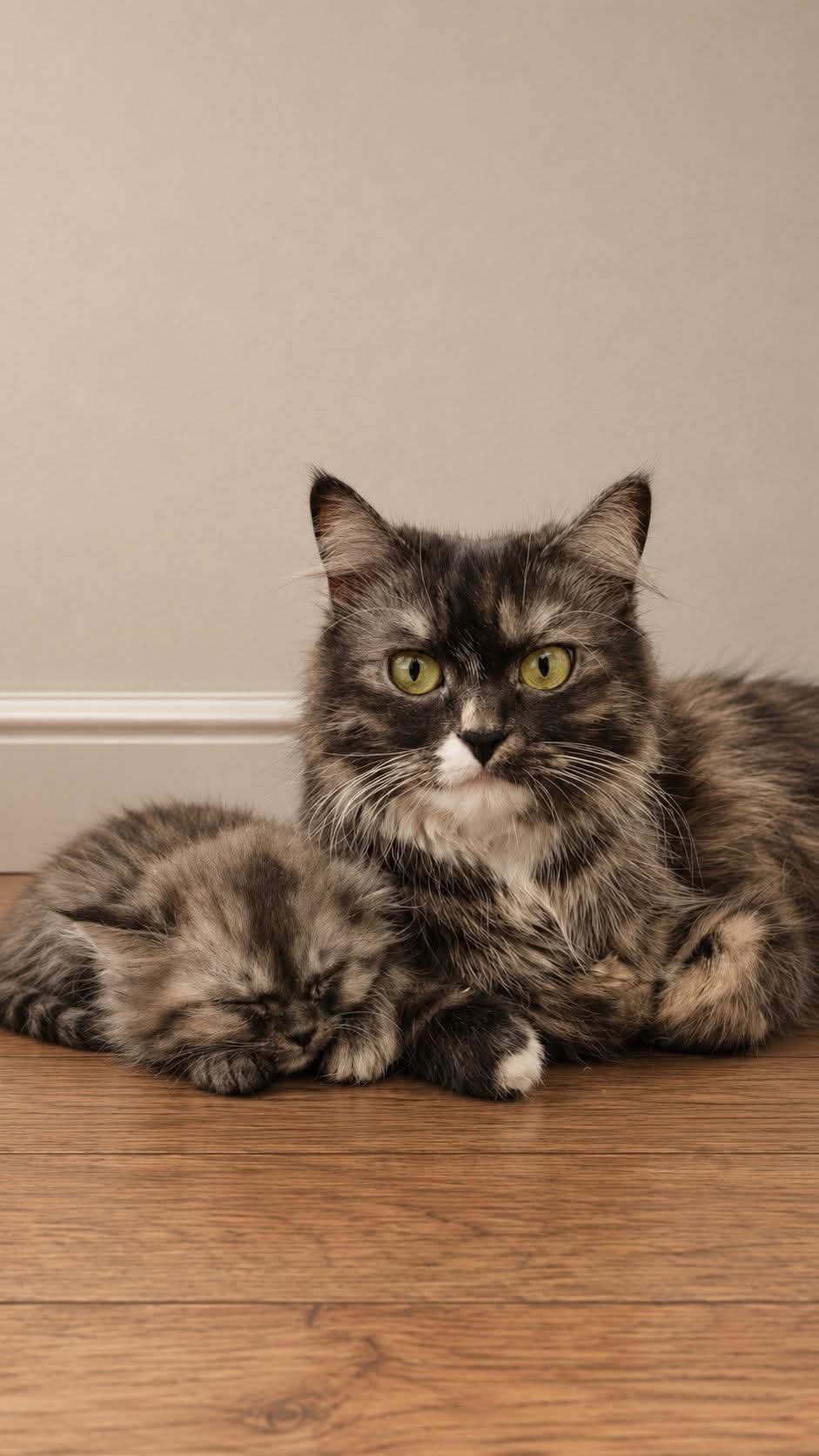
Uma gata de pelagem longa e mesclada em tons de cinza escuro, preto e branco, com olhos verdes expressivos e atentos, está deitada em um chão de madeira. Ao seu lado esquerdo, um pequeno filhote com a mesma pelagem cinza escura está encolhido e dormindo pacificamente. O fundo é uma parede cinza clara e lisa com rodapé branco, criando uma atmosfera íntima, terna e nostálgica.
Luna

With small steps
and a heart too large
for her frail little body,
she crossed the border,

carrying in her eyes
the terror of nights
when the sky came down
and the earth could no longer hold it.

She grew hungry
until her meow
became a whispered prayer.

She was driven from place to place
until she forgot
the shape of her first window,
the scent of the corner
where she once slept safely.

She ran from one sound to the next,
from one fear to another,

as though the whole world
had turned into a rabid dog,
chasing a cat
who wanted nothing
but to stay alive.

She did not reach safety alone.

Inside her,
a heartbeat stirred—
a heartbeat that had never seen war,
yet knew its thunder
through the walls of flesh and blood.

A silent witness
to a history
it had not yet been born into.

Its father, meanwhile,
remained behind.

On the far side of fear,
beneath a sky
that would not stop threatening,

hungry,
homeless,

trembling through the night
like a single leaf
at the mercy of the wind.

Luna did not know
that a border lay between them.

She did not know
the names of wars,
the shape of countries on maps,
or the language of exile.

She knew only this:

a place once called home
was gone.

And whenever her heart
began, little by little,
to grow quiet,

it would turn back,

as though it were still looking
for the cat
the war had left behind.

Waiting

at a door

that no longer exists.

Luna is a genocide survivor

Najwa Sadi Juma

Voltar

Facebook


Trust

Aziza Xasanova: Short story ‘Trust’

Aziza Xasanova
Aziza Xasanova
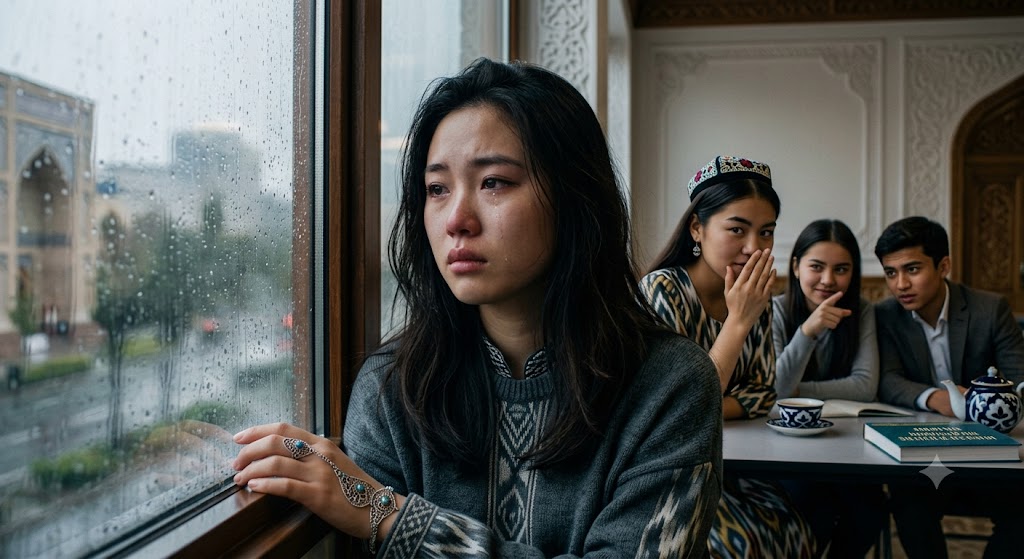
A sad young woman looking out a rainy window while another girl whispers in the blurred background, symbolizing betrayal and broken friendship
https://gemini.google.com/app/18fcaa32a295ec20?utm_source=app_launcher&utm_medium=owned&utm_campaign=base_all

She was an ordinary girl who trusted everyone too easily. She would tell all her secrets to her closest friend, Munisa, and feel relieved afterward. But as people say, “A girl has no true female friend.”

Guli believed Munisa was her dearest friend, but she discovered the painful truth too late—Munisa had betrayed her. How could she? Why? These questions echoed in Guli’s mind. With tears in her eyes, she silently promised herself, “I will never trust anyone again.”

Munisa would share every secret Guli confided in her with other girls. She spoke badly about Guli behind her back, yet whenever they met, she embraced her warmly as if she were the most loyal friend in the world.

One day, Guli said to Munisa about their classmate Nafisa,

“She has gained a little weight, but honestly, she looks even more beautiful.”

Then she added,

“Please don’t tell her I said that. Nafisa is always on a strict diet and doesn’t like gaining weight. If she hears it, she’ll be hurt.”

Two days later, Nafisa approached Guli.

“So you called me chubby, Gulikhon? I never expected that from you. You always told me I had a beautiful figure. Munisa told me everything. I thought you were a kind person, but now I see they were right—you are selfish and dishonest,” she said with disappointment.

At that moment, memories of three years of friendship with Munisa flashed before Guli’s eyes. Could it really be true? Had her closest friend been telling everyone her secrets? A deep pain filled her heart.

When Guli confronted Munisa, she replied indifferently,

“What’s the problem? I didn’t say anything bad.”

Guli looked at her with disbelief.

“I never expected this from you.”

Munisa simply answered,

“You’re the bad one. I only told the truth.”

From that day on, Guli could no longer trust anyone. Even during her school years, she had always been shy about getting close to other girls. When she entered university, she believed she had finally found a true friend.

Sadly, she was wrong.

Once trust is broken, it is almost impossible to restore. And sometimes, nothing ever becomes the way it was before.

Aziza Xasanova

Voltar

Facebook