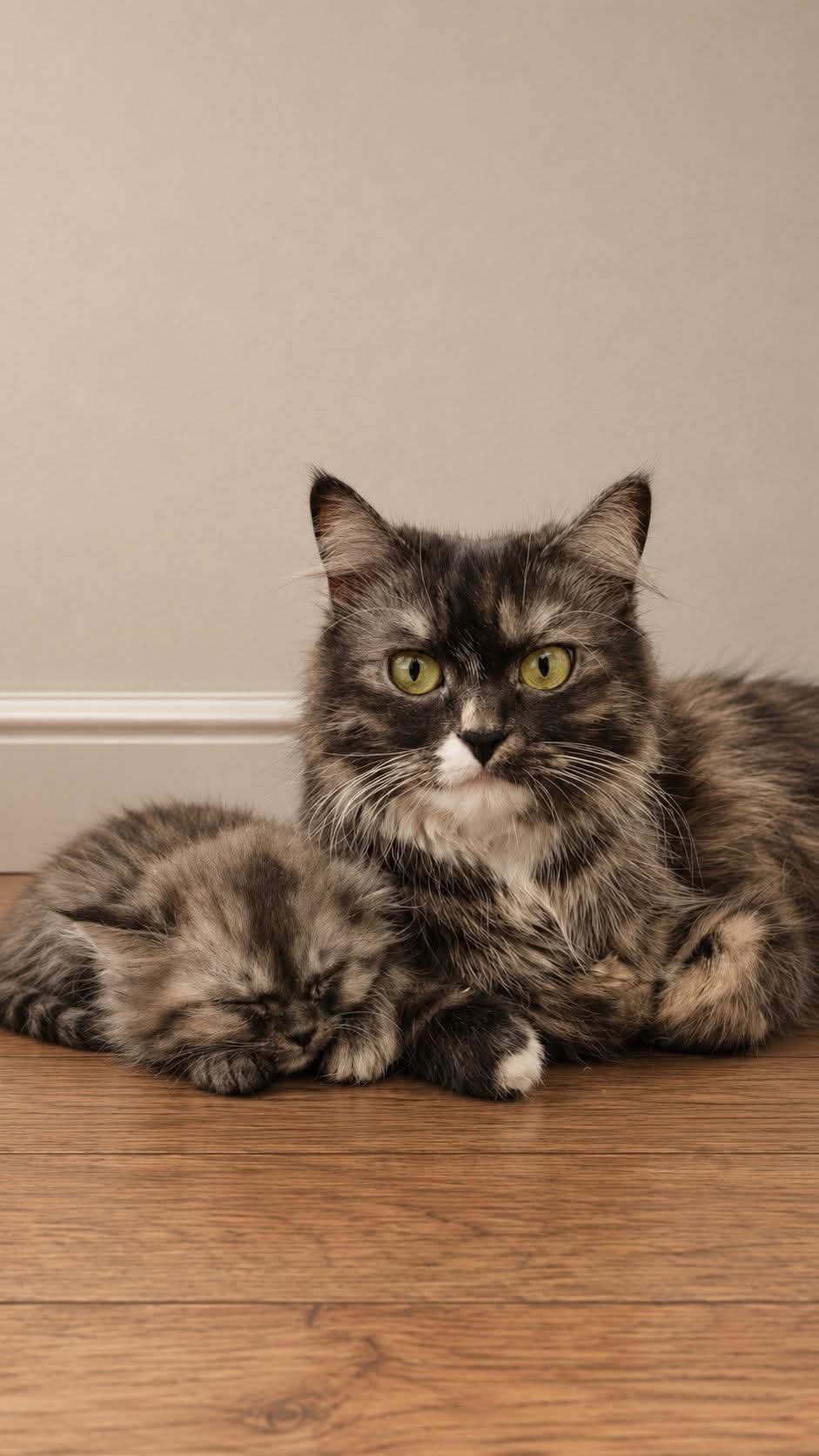
Through the paws of a refugee cat, the raw cruelty of war paints the most painful portrait of exile: a heart that keeps searching for home at a door that violence has already erased from the map
Najwa Sadi JumaLuna
With small steps and a heart too large for her frail little body, she crossed the border,
carrying in her eyes the terror of nights when the sky came down and the earth could no longer hold it.
She grew hungry until her meow became a whispered prayer.
She was driven from place to place until she forgot the shape of her first window, the scent of the corner where she once slept safely.
She ran from one sound to the next, from one fear to another,
as though the whole world had turned into a rabid dog, chasing a cat who wanted nothing but to stay alive.
She did not reach safety alone.
Inside her, a heartbeat stirred— a heartbeat that had never seen war, yet knew its thunder through the walls of flesh and blood.
A silent witness to a history it had not yet been born into.
Its father, meanwhile, remained behind.
On the far side of fear, beneath a sky that would not stop threatening,
hungry, homeless,
trembling through the night like a single leaf at the mercy of the wind.
Luna did not know that a border lay between them.
She did not know the names of wars, the shape of countries on maps, or the language of exile.
She knew only this:
a place once called home was gone.
And whenever her heart began, little by little, to grow quiet,
it would turn back,
as though it were still looking for the cat the war had left behind.