The third counsel
Against the mirrors of erasure and the betrayals of history, a lyrical sanctuary where the memory of the oppressed rises from the ashes of the cross

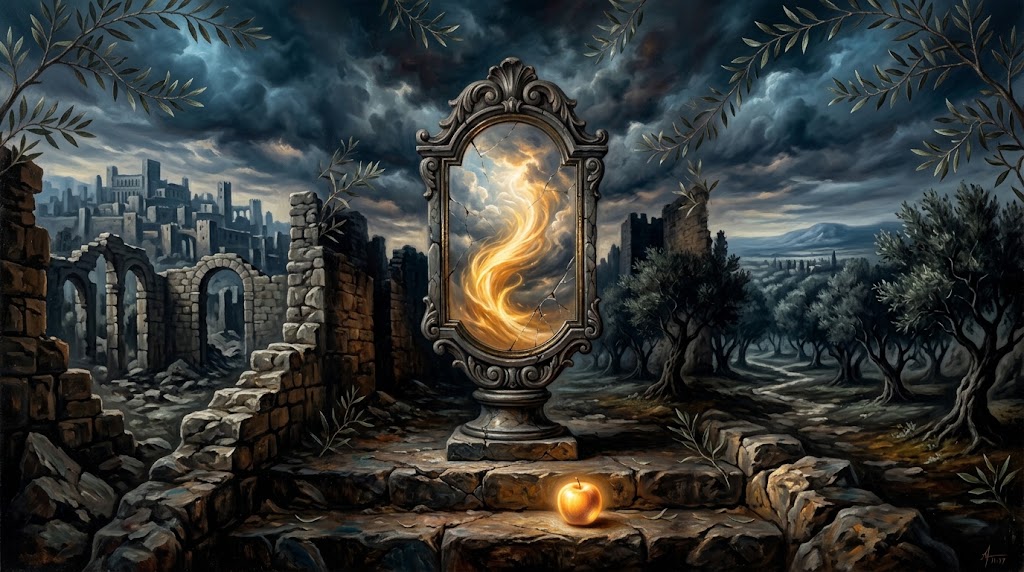
Do not forget your face
In the mirrors of others.
For features, like maps
In an enemy’s hand,
Carry the scent of the dead—
We did not see their limbs
Patrolling the walls in the lives of the narrators.
Set a stone between your words and theirs
So your voice may leave a trace
Revealing their hidden schemes.
For their shadows lean upon you,
Stretching over the wall,
As though the dead themselves
Had watched them pace
Through the chambers of strangers
Just to stay alive.
With the quick wit of a sparrow
Caught between a hunter’s fingers,
With the body whose very limbs
Are bewitched by it
With the serpent contemplating its sin
On the apple of vision,
With the remnant of regret
That bleeds along the edges of your day,
With what tomorrow inherits
From the lines of your hands,
With the pain
Before which tyrants’ foreheads
Have bowed.
Find your final turning glance
In their mirrors,
Then return
With the hollow ringing of its defeat
To the bells
Of the linage’s rams.
Your wrists upon the cross
May haunt them
If they see you rise
From among the graves.
And in their narratives,
Your standing among them,
Between the stones of counsel,
May take shape
Like wind
On the stairways of paradise—
Higher
Than their betrayal
Of your salt
On the road to resurrection.
It is not your voice
That speaks
So they may see your eyes
Descend from the cross
To gather the scattered limbs
Of your shadow.
Not your voice—
Only the ache
Of remembering.
Mary waited for you alone
In the stories
Told by sinners.
These councels are inspired by the advice of his mother, which he wrote under the title “The Ten Counsels of Fawziya Al-Hassan
Translated by Najwa Juma